





















What if you could stand on the roof of Japan, breathe air from another world, and taste a piece of culinary heaven, all in one day?
This iconic summit rises 3,776.24 meters into the sky. It sits just 100 kilometers southwest of Tokyo, making a visit surprisingly accessible.
As Japan’s highest peak, this mountain is a true world treasure. Its majestic presence offers a unique experience for every traveler.
I have gathered essential information to help you plan your perfect trip. Looking for panoramic views or a peaceful spot? This guide has the best day trips and local spots for you.
Your journey to this legendary mountain will be unforgettable. Let’s begin the adventure.
Introduction to the Iconic Mount Fuji
For over a hundred thousand years, this majestic stratovolcano has silently shaped the land and culture of Japan. Its near-perfect form stands as a beacon for artists and spiritual seekers alike.
Setting the Scene with Inspiring Facts
This colossal peak reaches exactly 3,776.24 meters into the sky. Consequently, it claims the title of Japan’s highest point. The mountain’s symmetrical cone is a geological masterpiece.
Furthermore, the volcano remains active though currently quiet. This information adds a layer of natural thrill to any visit. The site has witnessed immense geological history.
Why Mount Fuji Captivates Travelers
Mt. fuji inspires countless artworks due to its perfect shape. Moreover, it serves as a deeply spiritual mountain for many. The summit offers a perspective that feels truly transcendent.
Therefore, travelers feel drawn to this sacred place year after year. The knowledge that it’s a living volcano enhances the experience. This natural icon continues to captivate hearts across generations.
| Feature | Detail | Significance |
|---|---|---|
| Type | Stratovolcano | Classic conical shape |
| Height | 3,776.24 meters | Japan’s highest point |
| Geological Age | Over 100,000 years | Ancient natural monument |
| Volcanic Status | Active (dormant) | Adds a thrilling element |
| Cultural Role | Sacred site & artistic muse | Deep spiritual inspiration |
The Majesty of Mount Fuji: Panoramic Views and Day Trip Highlights
Just a short journey from the bustling capital, a world of natural wonder awaits around the famous five lakes. These serene bodies of water provide the most iconic frames for the majestic peak.
Unforgettable Panoramic Experiences
The fuji five lakes area is the premier destination for breathtaking vistas. Kawaguchi, Yamanaka, Sai, Motosu, and Shōji lakes each offer a unique view of the mountain.
Lake Kawaguchi is especially famous. Visitors often capture its perfect, mirror-like reflection.
Plan Your Mount Fuji Day Trips
Because the summit is only 100 km from Tokyo, a day trip is wonderfully easy. I highly recommend starting at Lake Kawaguchi.
My favorite way to enjoy mt. fujiis by touring the lakeshores. These spots provide the most stunning images for any travel album.
As you explore, you will find all five lakes offer diverse vantage points. Each season paints a new and beautiful image of the landscape.
Rich History and Cultural Significance
In 2013, the world recognized the immense cultural value of this natural monument by declaring it a UNESCO World Heritage site. This honor celebrates its dual role as a sacred pilgrimage destination and an enduring artistic muse.
Spiritual Traditions and Artistic Inspirations
During the Edo period, the mountain became a central theme in woodblock prints and paintings. Consequently, its perfect shape influenced artistic vision across Japan and beyond.
The spiritual heart of the area is Fujisan Hongū Sengen Taisha, a key shrine. I believe visiting a local temple near the base helps you appreciate the spiritual language of the landscape.

Because there are 25 designated cultural sites nearby, you can spend days exploring. This network of locations truly makes Mount Fuji a world heritage treasure.
Whether drawn to ancient rituals or contemporary art, the history here is woven into modern culture. This deep connection ensures the mountain’s legacy remains vibrant and alive.
Navigating Mount Fuji Adventures and Itineraries
To fully embrace the majesty of Japan’s highest point, understanding seasonal access and trail conditions is essential. Therefore, proper preparation transforms a simple visit into an extraordinary experience.
Essential Tips for Planning Your Visit
A successful ascent begins long before you reach the trailhead. Your safety is the most important factor for an enjoyable climb.
- Always check the latest weather forecasts and official trail information.
- Dedicate at least one full day to acclimatize your body to the high altitude.
- Pack appropriate gear for the unpredictable conditions on the summit.

Seasonal Considerations and Accessibility
The official climbing window is during the summer months. Consequently, this is when all trails are open and maintained for visitors.
Each year, between 200,000 and 300,000 people journey to the top. Moreover, the mountain offers various routes that cater to different skill levels during this peak season.
With the right information and timing, your adventure will be both safe and profoundly rewarding.
Experiencing Japanese Cuisine Around Mount Fuji
After a day of breathtaking exploration, your senses are primed for another kind of elevation: the sublime flavors of local Japanese cuisine. The area surrounding Mount Fuji is a celebrated culinary destination in its own right.

Savoring Authentic Wagyu Beef and Local Flavors
This region is a premier source of fresh, high-quality ingredients from across the country. Restaurants here craft dishes that truly reflect the local bounty.
The undisputed star is the exceptional Wagyu beef. It is often prepared using traditional styles that have been perfected over many times, offering unparalleled tenderness and flavor.
- After a long day of hiking, the rich taste of perfectly grilled Wagyu is the ultimate reward.
- Dining with the majestic mountain as your backdrop creates a memory that is truly special.
- Whether you choose yakiniku or shabu-shabu, this culinary highlight is simply unmissable.
This combination of world-class food and an iconic view completes the perfect mountain visit.
Adventure and Leisure: Hiking, Climbing, and More
The call to adventure echoes across the slopes of Japan’s most iconic peak, inviting explorers of all levels. Since the monk En no Odzunu completed the first recorded climb in 663, reaching the summit has been a revered goal. Today, this pursuit draws between 200,000 and 300,000 people each year.

Exploring Trails and Scenic Routes
Consequently, the network of paths around the mountain caters to every ambition. I highly recommend exploring the various trails that wind through the landscape. These routes offer unique perspectives on the powerful volcanic events that shaped the terrain centuries ago.
Therefore, hiking on mt. fuji feels like walking through a living history book. The ground beneath your feet tells a story of eruptions from millennia ago. This connection to the past adds a profound depth to the physical challenge.
Moreover, whether you aim for the top or prefer a lakeside stroll, mt. fuji provides a perfect adventure. The mountain is one of the world’s most famous volcanoes, yet its trails welcome both seasoned climbers and casual walkers. Your journey to the summit or along its base promises to be uniquely rewarding.
Understanding Mount Fuji’s Geology and Recent Activity
Beneath its serene beauty, the geological heart of Japan’s tallest peak tells a story of fiery creation and constant change. This knowledge transforms a simple view into a profound connection with the earth’s power.
Consequently, exploring its volcanic past is key to appreciating the landscape you see today. The mountain’s history is written in layers of rock and events from long ago.
Insights into Volcanic History
Mt. fuji is a complex volcano that began forming roughly 100,000 years ago. Its current majestic structure evolved over many thousands of years through successive eruptions.
The last major eruption occurred from 1707 to 1708. This event, known as the Hōei eruption, left a distinct crater on the southeastern flank. Visitors can still see this remarkable feature today.
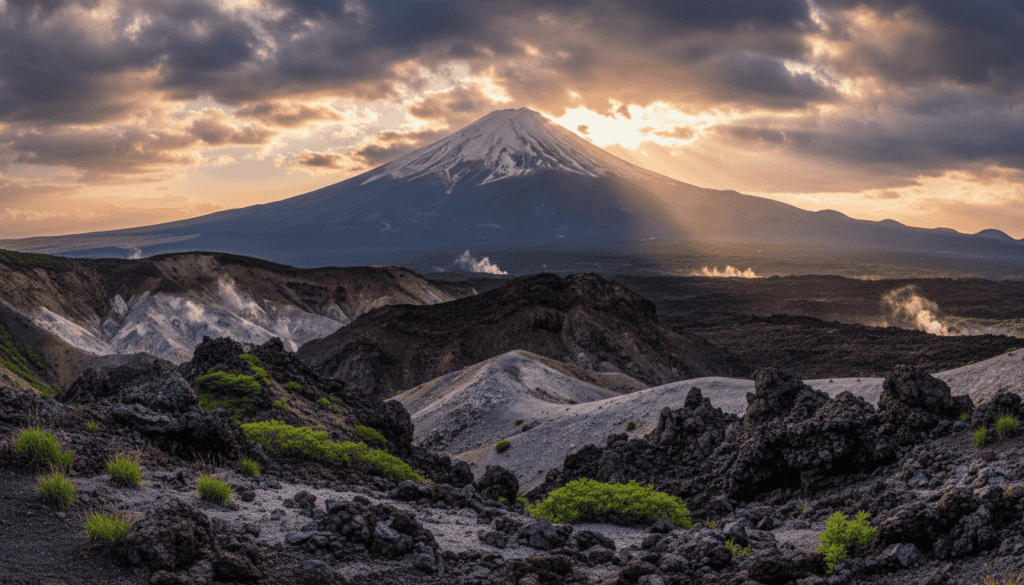
Because of this volcanic activity, the region is defined by layers of ash and rock. These deposits have shaped the entire surrounding landscape over centuries.
I find it fascinating that mt. fuji is actually several overlapping volcanoes. Each one contributed to the mountain’s impressive height. Therefore, it stands as a testament to powerful natural forces.
Although the last eruption was centuries ago, the volcano remains closely monitored. Scientists watch for any signs of new activity that could affect the surrounding flank and beyond.
| Geological Event | Time Period | Lasting Impact |
|---|---|---|
| Initial Formation | ~100,000 years ago | Base of the stratovolcano established |
| Hōei Eruption | 1707-1708 | Created the prominent SE flank crater |
| Ash Deposition | Throughout history | Defined the fertile soils of the region |
| Current Status | Present day | Active but dormant; under constant observation |
Practical Information for Travelers to Mount Fuji
With the right information, your experience at this UNESCO world heritage site can be both effortless and deeply enriching. Consequently, focusing on a few key logistics will elevate your entire journey.
Transportation, Accommodations, and Local Etiquette
Getting to the area is straightforward via train and bus networks. Therefore, I suggest you search for the latest news and official schedule release before your trip. Schedules often change with the season.

Accommodations around mt. fuji range from modern hotels to traditional inns. Many of these lodgings have welcomed visitors for years ago, preserving a charming historical period.
- Plan your itinerary in advance because this world heritage area is filled with many cultural sites.
- Always respect local temple and shrine etiquette. This is a key part of honoring the site’s status.
- Stay informed about local events. They offer a beautiful glimpse into the living language of the region’s culture.
Remember, your visit supports the preservation of this incredible world heritage location. Simple, respectful actions make a big difference.
| Travel Aspect | Key Consideration | Pro Tip |
|---|---|---|
| Transportation | Check for seasonal schedule changes. | Book train tickets early during peak travel times. |
| Accommodation | Options vary from luxury to traditional ryokan. | Staying near a lake offers stunning morning views. |
| Cultural Etiquette | Quiet respect is expected at sacred sites. | Observe how locals pray or offer respects before participating. |
Conclusion
Your journey to this legendary peak culminates in memories that will inspire you for years to come. This majestic mountain offers a perfect blend of adventure, culture, and natural beauty.
From the breathtaking summit views to the rich local cuisine, every experience here is profound. I hope this guide gives you the information needed to plan your own trip.
As a UNESCO world heritage site, we must protect this area for future generations. Whether you visit in summer or winter, the magic of this volcano stays with you long after you return home.
FAQ
What is the best time of year to experience this iconic peak?
How challenging is the climb to the summit?
Is the volcano considered active or safe for visitors?
Why is this mountain so important to Japanese culture?
What are the best transportation options from Tokyo?
Can I find exceptional local cuisine in the region?