






















Have you ever tasted a dish that feels like a warm hug from a friend? For many in Malaysia, that dish is none other than nasi lemak. This beloved meal, often considered the national dish, is more than just food; it’s a symbol of culture and tradition.
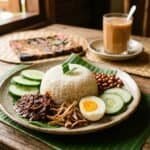
Imagine a plate filled with fluffy rice, cooked in creamy coconut milk, paired with a spicy sambal that awakens your senses. The dish is a beautiful balance of flavors, featuring crispy anchovies, crunchy peanuts, fresh cucumber, and a perfectly cooked egg. Each bite tells a story, connecting generations through shared meals.
Nasi lemak, the heart and soul of Malaysian food, is not just enjoyed at breakfast; it graces tables during family gatherings and celebrations. It’s a culinary experience that resonates deeply with the Malaysian spirit. Interestingly, neighboring countries like Singapore and Thailand have their own versions, showcasing how this dish has woven itself into the fabric of Southeast Asian cuisine.
Introduction to NASI LEMAK
Can a dish capture the essence of a culture? In Malaysia, one meal stands out. Nasi lemak is more than just a plate of rice; it embodies the heart of Malaysian culinary tradition. The term nasi means rice, while lemak refers to the richness of coconut milk. Together, they create a dish that is a staple across Malaysia and beyond.
A practical breakfast tradition is nasi lemak bungkus, where hot rice, spicy sambal, dried anchovies, peanuts, cucumber, and a boiled egg are wrapped in banana leaves and paper. This method not only adds aroma but also makes it easy for workers and students to enjoy a hearty meal on the go. Azlin Bloor fondly remembers preparing hundreds of these packets each morning in her grandmother’s catering kitchen during the late 1970s and early 1980s.
Over the years, this dish has evolved from humble origins to a national treasure. It is now popular in Malaysia, Singapore, Brunei, and Southern Thailand. Originally made with simple ingredients, modern variations often include chicken, curry, or rendang, making it a celebratory feast for families.
Ingredients and Regional Variations
In the world of cuisine, some dishes stand out for their rich flavors and cultural significance. Nasi lemak is a prime example, with its delightful combination of ingredients. The core components include fluffy rice cooked in coconut milk, paired with spicy sambal, crispy anchovies, and crunchy peanuts. These elements create a balance of flavors that is both satisfying and comforting.
The preparation begins with long-grain jasmine or basmati rice, infused with pandan leaves for a fragrant aroma. The sambal adds a sweet and spicy kick, often made from dried red chilies, garlic, and shrimp paste. This contrasts beautifully with the salty crunch of fried anchovies and peanuts, making each bite a flavorful experience.
While traditional versions may include a boiled egg or an omelet, the dish is adaptable. Some regions might serve it with slices of fresh cucumber to cool the palate. Variations like Indonesian nasi uduk and Bruneian nasi katok showcase local twists, proving that every cook can add their unique touch.

How to Make Genuine Nasi Lemak at Home
Imagine a meal that not only satisfies your hunger but also tells a story. Making authentic nasi lemak at home is easier than you think. Follow this simple recipe to create a delicious dish that captures the essence of Malaysian cuisine.
Start with 2 cups of jasmine rice and one 400-gram can of coconut milk. Add one stalk of lemongrass or pandan leaves for extra flavor. Rinse the rice thoroughly and combine it with the coconut milk and enough water to cover. Simmer for 10 minutes, then cover and reduce the heat for another 10 minutes. Let it rest, covered, for 2 minutes.
Next, prepare the sambal. Soak dried chilies in hot water for 15 minutes. Blend them with fresh chili, shallots, garlic, and shrimp paste until smooth. In a saucepan, heat oil and cook the sambal until the red oil rises. Balance the flavor with tamarind and brown sugar.
Fry about 30 grams of dried anchovies in oil until golden brown, about 2 to 3 minutes. Similarly, fry 100 grams of peanuts for 3 to 5 minutes until lightly browned. Serve the rice shaped in a small bowl, topped with anchovies, peanuts, cucumber slices, hard-boiled eggs, and sambal. Enjoy!

The Art of Cooking Coconut Rice
Cooking coconut rice is an art that requires precision and care. To achieve the perfect blend of flavors, start with rinsed jasmine or basmati rice. Measure out the coconut milk and water, and add a pinch of salt. For an aromatic touch, tie pandan leaves into a knot and add them to the mix.
Rinsing the rice 2 or 3 times is essential. This step removes excess surface starch, ensuring the grains remain tender rather than gummy. In a saucepan, gently cook the rice for about 15 minutes. After that, let it rest covered for another 10 minutes to allow the remaining liquid to finish cooking the rice.
When the liquid reaches a simmer, reduce the heat and stir carefully. This prevents the coconut milk from catching on the bottom. If you’re using a rice cooker, remember that it typically requires equal volumes of rice and liquid, but this can vary by appliance.
If pandan leaves are unavailable, lemongrass is a great substitute. However, pandan should remain the primary source of aroma. Once the rice is ready, fluff it with a fork and remove the pandan leaves before serving it with sambal and garnishes.

NASI LEMAK: Street Food to Celebratory Feast
For many, enjoying a meal is not just about taste; it’s an experience that brings people together. Nasi lemak is a perfect example of this, bridging the gap between street food and celebratory feasts. Travelers can find this delightful dish at Malaysian and Singaporean breakfast stalls, food courts, and casual restaurants. Each bite offers a flavor journey, starting from creamy, fragrant rice to sweetly spicy sambal, salty anchovies, crunchy peanuts, cool cucumber, and soft egg.
Traditionally, nasi lemak bungkus is wrapped in banana leaves and paper for takeaway. This method allows the aroma of the banana leaf to mingle with the warm rice, enhancing the overall experience. Diners often open it with their fingers, embracing the authentic eating customs of Malaysia.
In the late 1970s and early 1980s, Azlin Bloor prepared hundreds of these packets each morning in her grandmother’s catering kitchen. Today, you can create a similar experience at home. Line your plates with frozen banana leaves from Asian or Indian grocery stores before adding the rice and garnishes. You can prepare the individual components ahead of time and assemble them as guests arrive, making it a relaxed celebratory meal.
For those wanting to elevate their feast, consider adding ayam goreng, red chicken curry, or beef rendang. These optional additions provide a richer and more substantial presentation, perfect for entertaining.
| Component | Flavor Profile | Serving Style |
|---|---|---|
| Rice | Creamy and fragrant | Plated or wrapped |
| Sambal | Sweet and spicy | On the side |
| Anchovies | Salty and crunchy | Sprinkled on top |
| Peanuts | Crunchy | On the side |
| Cucumber | Cool and refreshing | Sliced |

Conclusion
Nasi lemak is more than just a dish; it represents Malaysia’s rich history and culture. This beloved meal brings together flavors and traditions, showcasing a welcoming approach to shared food.
Preparing it at home is easy. The essential components—coconut rice, sambal, anchovies, peanuts, cucumber, and egg—can be made separately. The pandan-scented rice and balanced sambal create a signature taste, while careful heat control ensures perfect texture.
Wrapping it in banana leaves preserves tradition, while plated servings are perfect for family dinners or celebrations. Start with the classic combination, then explore options like ayam goreng or curry at your own pace.
Each serving offers a fragrant, comforting taste of Malaysian food culture, whether enjoyed from a street stall or in your kitchen.